ML 系统设计
ML systems design 将 01-03 文件中的基础设施模式应用到 machine learning 的特定挑战上。本文覆盖 ML lifecycle、data management、training infrastructure、model evaluation、serving strategies、feature engineering、ML pipelines 与 monitoring。
- 像“Design a recommendation system for YouTube”这样的 systems design 面试题,不是在让你讲推荐算法本身,而是在让你设计完整系统:data pipelines、feature engineering、model training、evaluation、serving、monitoring 与 iteration。本文提供这一整套框架。
ML 系统生命周期
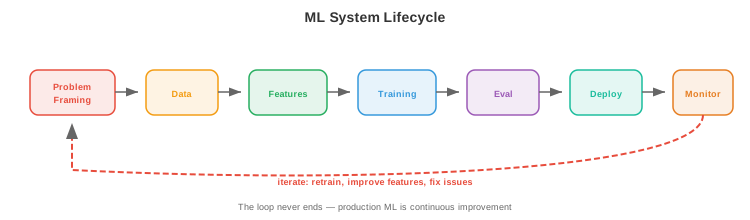
- 无论是 spam classifier 还是 foundation model,所有 ML system 都遵循同一生命周期:
Problem Framing → Data → Features → Training → Evaluation → Deployment → Monitoring → Iteration
       ↑                                                                                    │
       └────────────────────────────────────────────────────────────────────────────────────┘
Problem Framing
-
在接触 data 或 model 之前,先定义:
- What 要预测什么?(click probability、next token、object bounding box)
- Who 用户是谁?(end users、internal analysts、其他 ML models)
- What are the constraints? 约束是什么?(latency < 100ms、offline batch 即可、必须 on-device 运行)
- What is the business metric? 业务指标是什么?(revenue、engagement、accuracy),以及它和 ML metric 的关系是什么?
- What is the baseline? 基线是什么?(heuristic、rule-based system、existing model)——只有超过基线,ML system 才有价值。
-
Common mistake:在理解问题前就跳到 model architecture。“We should use a transformer”不是系统设计答案;“我们要在 200ms 内为 10M 候选预测 click probability,所以需要 two-stage system:先 fast retrieval,再 small ranking model”才是。
Data Management
Data Collection and Labelling
-
Explicit labels:由人工标注数据(click/no-click、object bounding boxes、conversation quality ratings)。成本高(按复杂度每条约 ~\(0.02-\)10)、速度慢,且主观性强。
-
Implicit labels:从 user behaviour 推导标签,例如 clicks、dwell time、purchases、skips。便宜且充足,但噪声大(click 不等于满意,skip 也不等于不喜欢)。
-
Programmatic labelling(Snorkel):编写 labelling functions(heuristics、regex、existing models)对每个样本投票,再用统计方法聚合成 probabilistic labels。可扩展到百万级样本,准确率中等。
-
Active learning:model 找出最不确定的样本并请求人工标注,从而最大化标注效率:1000 条主动选择标签可达到约 10000 条随机标签的效果。
Data Quality
-
Data validation:检查每个 incoming batch 是否存在 schema violations(字段缺失、类型错误)、distribution shift(均值显著变化)和 volume anomalies(预期 1M 行,实际 500K)。
-
Great Expectations 与 TFX Data Validation 可定义 data expectations,并在违规时告警。
-
Data versioning:每次 training run 都应可复现。DVC(chapter 15)将 data files 与 code 一起追踪;每个 dataset version 对应一个 hash,training config 引用该 hash。
Feature Stores

-
Feature stores(chapter 15)为 training 与 serving 提供一致 features。关键概念如下:
-
Offline features:由 batch pipelines(Spark)计算并存储在 data warehouse,用于 training 与 batch inference。示例:用户 30 天平均 session 时长、item 总购买次数。
-
Online features:实时计算,或预计算后从低延迟存储(Redis、DynamoDB)提供,用于 real-time inference。示例:用户最近 5 次行为、当前购物车内容。
-
Training-serving skew:若 training 与 serving 的 feature 计算逻辑不同,model 在 inference 时看到的 feature 分布就会偏离训练时。feature store 通过复用同一计算逻辑来消除该问题。
-
Training Infrastructure
-
对本书读者而言,distributed training 已在 chapter 6 详细讲过(data parallelism、model parallelism、mixed precision、scaling laws)。这里聚焦系统层面:
-
Experiment tracking(W&B、MLflow — chapter 15):每次 training run 记录 hyperparameters、metrics、git commit、data version、hardware。这是 model 世界中的 version control。
-
Hyperparameter tuning:自动搜索 hyperparameters。方法包括:grid search(穷举、成本高)、random search(效果常常不错)、Bayesian optimisation(建模目标函数并优先采样高收益区域)、以及 ASHA(Asynchronous Successive Halving:先开大量 trials,尽早淘汰表现差者)。
-
Training pipeline orchestration(Airflow、Kubeflow — chapter 15):自动化 data prep → training → evaluation → registration 流程,支持日常 retraining 调度并在失败时告警。
Model Evaluation
Offline Evaluation
-
Held-out test set:在 model 训练期间从未见过的数据上评估。是标准做法,但若 test set 不能代表生产数据,结论会误导。
-
Slice-based evaluation:按子群体评估(user demographics、content type、language、time period)。某 model 总体 accuracy 95%,但某少数群体仅 70%,这通常不可接受。
-
Backtesting:用于 time-series 或 sequential prediction,按时间顺序在历史数据上评估。用截至 \(t\) 的数据训练,用 \(t\) 到 \(t + \Delta t\) 的数据评估,避免未来信息泄漏。
Online Evaluation
-
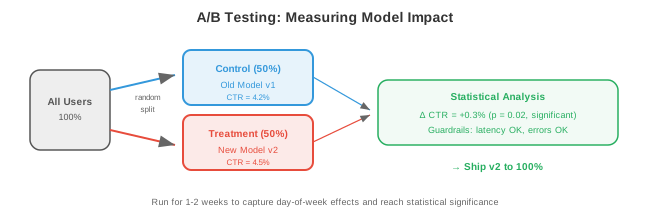
A/B testing:将线上流量随机分为 control(old model)与 treatment(new model),对比 revenue、engagement、retention 等 business metrics,并进行 statistical significance 检验。它是评估 ML 变更的 gold standard。
-
Sample size:需要足够数据才能检测预期 effect size。比如 click-through rate 提升 0.1%,通常需要百万级 impressions 才能显著检出。
-
Duration:至少覆盖一个完整周期(多数产品为 1-2 周),捕捉 weekday/weekend 等周期效应。
-
Guardrail metrics:除目标指标外,还应监控不应恶化的指标(page load time、error rate、crash rate)。若 revenue 上升但 crash 同时增加,净效果可能是负的。
-
-
Shadow deployment:在生产中让 new model 与 old model 并行运行。二者接收同样请求,但只返回 old model 结果给用户,再离线对比输出。可在不影响用户的前提下发现 bug 与质量问题。
-
Interleaving:针对 ranking 问题,将 old/new model 的结果交织进同一列表,让用户直接与交织结果交互,并比较两模型获得的 engagement。相较 A/B testing,达到显著性通常需要更少用户。
Model Serving
Batch vs Real-Time
-
Batch inference:对所有可能输入预计算预测,存入 database/cache 并直接读取。适用于:input space 有限(例如 nightly 为全量用户生成推荐)、freshness 要求不高(按天即可)、latency 容忍高。
-
Real-time inference:按请求即时计算预测。适用于:input space 无限(任意用户 query)、freshness 关键(必须针对当前 query 实时预测)、并且 latency 要低。
-
许多系统会混用:batch 预计算一批候选(便宜,覆盖 80% 流量),real-time 处理剩余长尾 query 与新用户(更贵)。
Model Versioning and Registry
-
Model registry(MLflow、W&B、SageMaker)保存训练后的 model 与 metadata:
- version 编号与 training 日期。
- training config 与 data version。
- evaluation metrics(accuracy、latency、memory usage)。
- stage:development → staging → production → archived。
-
Rollback:若 new model 在线上指标退化,应立即回滚到上一版本;registry 能将其变成一键操作。
Feature Engineering
- Feature engineering 将 raw data 转为 model 所需输入。它往往是 ML 中杠杆最高的环节:feature 变好,几乎所有 model 都会变好;反之再强的 model 也受限于输入 feature。
Online vs Offline Features
-
Offline features:预计算、变化慢(如 user demographics、30-day aggregates),由 batch pipelines(Spark)计算并存入 feature store。
-
Online features:反映当前状态、变化快(如 cart 内容、last action、current location),由 event streams 实时计算,或从 fast store 查询。
-
Feature freshness:有些 feature 需要秒级新鲜(fraud detection:结合最近 5 笔交易判断异常),有些可小时级陈旧(recommendation:用户历史偏好)。freshness 越高,计算与 serving 成本越高。
常见 Feature Patterns
- Counting features:时间窗口内事件计数(最近 7 天 purchases、最近 24 小时 logins)。
- Embedding features:categorical 变量的 learned embeddings(user embedding、item embedding、query embedding),常作为 two-tower 等架构输入。
- Cross features:两个及以上 features 的组合(user_age × item_category),用于捕捉单一 feature 难以表达的交互。
- Temporal features:time since last action、day of week、hour of day,用于建模时间模式。
- Aggregation features:分组后的 mean、median、min、max、std(如某 seller 商品平均评分)。
ML Pipelines
- ML pipeline 负责从 data 到 deployed model 的全流程编排:
Data ingestion → Validation → Feature engineering → Training → Evaluation → Registration → Deployment → Monitoring
-
每一步都是 orchestrator(Airflow、Kubeflow、Metaflow — chapter 15)中的 task。pipeline 应具备:
- 按计划运行(daily retraining)或按事件触发(new data available)。
- 幂等性(重复运行产出一致结果)。
- 重试机制(如 feature 计算失败后带 backoff 重试 3 次)。
- 产出并版本化 artifacts(trained model、evaluation report、feature statistics)。
-
Metaflow(Netflix/Outerbounds)尤其适合 ML:可联合版本化 code/data/model,用同一份代码支持 local development 与 cloud execution,并可集成 K8s 与 AWS。
Monitoring
- chapter 15 已讲 monitoring 基础(Prometheus、Grafana、alerts),这里聚焦ML-specific monitoring。
Data Drift
-
Data drift 指 incoming data 分布相对训练数据发生变化。比如在 summer 数据训练的 model,可能在 winter 数据上明显退化(user behaviour 与商品供给都不同)。
-
Detection:用统计检验对比 incoming features 与 training distribution:
- KS test(Kolmogorov-Smirnov):比较两组 empirical distributions,判断是否来自同一底层分布。
- PSI(Population Stability Index):衡量分布偏移幅度。PSI < 0.1 通常稳定,0.1-0.25 中度偏移,> 0.25 显著偏移。
- Embedding drift:用 centroid distance 或 MMD(Maximum Mean Discrepancy)比较 incoming queries 与训练集 embedding 分布。
Concept Drift
-
Concept drift 指输入与输出关系改变:features 看起来类似,但正确预测已不同。例:文化事件、疫情或产品变化后,用户偏好发生迁移。
-
与 data drift 相比,concept drift 更难检测,因为通常需要 labelled data。可监控 proxy metrics:click-through rate、conversion rate、user satisfaction scores;若持续下降,常提示 concept drift。
Model Degradation
-
model 随时间退化可能由多种原因导致:data drift、concept drift、feature pipeline bug(某 feature 开始返回 null)、upstream data 变更(第三方 API 响应格式变了)。
-
Response:发现退化后按严重度处理:
- Mild:用近期数据 retrain(通常由 scheduled retraining 处理)。
- Moderate:定位根因(哪个 feature 变了?哪个 user segment 受影响?)。
- Severe:先立即 rollback 到历史版本,再深入排查。
Feedback Loops
-
ML systems 会形成 feedback loops:model prediction 影响 user behaviour,而这些行为又成为下一版 model 的训练数据。循环可能正向,也可能恶化。
-
Positive feedback loop(危险):推荐系统主要展示热门 item → 用户只能点热门 item → model 学到“热门更热门” → 多样性崩塌。model 在生产中不断制造强化自身偏见的数据。
-
Negative feedback loop(同样危险):fraud detection model 抓住了所有 A 类欺诈 → 训练数据里不再出现 A 类欺诈 → 下一版 model 学不会识别 A 类 → A 类欺诈反弹。
-
Mitigations:
- Exploration:展示一部分 model 不确定内容(epsilon-greedy、Thompson sampling),以收集更丰富训练数据。
- Counterfactual logging:记录 model“本会给出的预测”,而不只是用户实际看到的结果,用 counterfactual data 进行去偏训练。
- Holdout sets:随机让一部分流量不经过 model 过滤,获得未过滤 ground truth 以评估 model 质量。
- Delayed labels:等待真实结果再用于训练。今天点击的推荐明天可能后悔;fraud 预测通常要等 chargeback window(30-90 天)结束。
Embedding Table Management
-
大规模 ML system 常有 100M+ 条目的 embedding table(每个 user/item/ad/entity 一条 embedding)。其规模化管理本质是系统问题:
-
Storage:100M entities × 256-dim × float16 = 50 GB,放不进单卡 GPU memory。常见方案:存 CPU memory 并做 GPU-side caching、多机 shard,或使用 hash embeddings(将实体 hash 到固定大小表,接受碰撞)。
-
Updates:embedding 会随 retraining 更新。部署新 embedding table 到 serving 时,需要在不影响 live traffic 的前提下加载 50 GB 数据、校验正确性,并在指标退化时可回滚。可使用 blue-green deployment。
-
Staleness:新用户没有 embedding(cold start)。可用默认 embedding、用 feature-to-embedding model 从用户特征推导 embedding,或回退到 non-personalised model。
Fairness and Bias
-
ML systems 可能系统性地对不同群体区别对待,这常来自训练数据中的 bias。Fairness monitoring 是责任,而非可选功能。
-
Metrics to monitor:
- Demographic parity:不同群体(gender、ethnicity、age)的 positive prediction rate 是否存在差异?
- Equal opportunity:不同群体的 true positive rate 是否一致?(例如招聘模型应对各群体同样善于识别 qualified candidates。)
- Calibration:若 model 对 A 群体给出 P(qualified)=0.7,A 群体是否确有约 70% 合格?B 群体是否同样成立?
-
Practical steps:
- 在 slices(subgroups)层面评估 model,而不只看 overall metrics。
- 在 model evaluation pipeline 纳入 fairness metrics(若总体 accuracy 提升但特定群体退化,未经审查不应上线)。
- 文档化已知 limitations 与 failure modes。
- 对敏感领域(hiring、lending、criminal justice、healthcare)建立模型审查流程。